MOTOROLA EARLY LAND Mobile Equipment INDEX
페이지 정보

본문
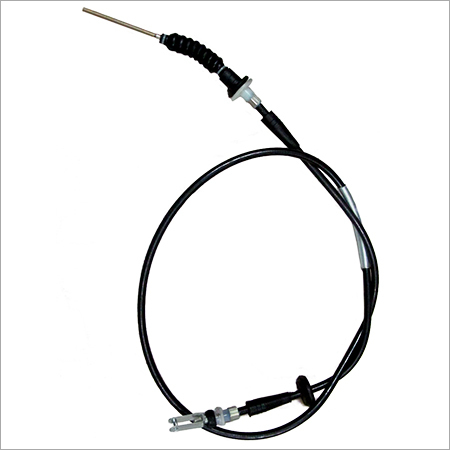 We'd actually prefer to get information (including elements lists, person manuals and programminh manuals) for the Saber, Astro Saber, XTL, XTS, MCS, MTS and APX collection. Shown under are the standard speedometer cable model "distant" control head for the P-69- sequence Police Cruiser receivers which did not characteristic electrical quantity control, specifically the P-69-12, 13 and 18, and the "small" cellular speaker. This head is part No. 1292-118. The control capabilities are simple, except perhaps for the AUX 1 and AUX 2 buttons. Typically provided by 1942 was the standard under-sprint P-254 head as also proven beneath, which was normally used with a microphone. There was also a "giant" mobile speaker, featured within the photo of the transmitter installation proven later on this page. Or, a Galvin Police Cruiser receiver installation may need had a Stancor or GE transmitter added later. The SP-2 is already wired this manner and was mainly supposed to facilitate the addition of a transmitter to the mobile set up and placement of the receiver in the vehicle trunk compartment. The one piece TR 20-18 set shown here was utilized by the Tracy, California Fire Department in a hearth engine and was licensed as a police transmitter, into the late 1940's. It comprises a P-69-18 receiver and a T-69-20A transmitter.
Otherwise, the set is identical as the standard P-69-18. In many areas, all local businesses other than state police shared the same frequency, which was typically the one also utilized by the Highway Patrol, and thus there have been small towns with systems on frequencies technically reserved for state police use. State police, counties and highway patrol (and some massive metro areas) usually broadcast on the 1550-1750 Kilocycle band, while cities and small towns used the other band of 2300-2490 Kilocycles. On the time, police dispatching was virtually completely in the 1550-1750 Kilocycle and 2300-2490 Kilocycle ranges, and was of course AM. Prior to this time, Motorola had produced small quantities of mobile police receivers by modifying commonplace vehicle broadcast radios, almost on a "request" foundation for close by police departments. At that time, the corporate was not so massive that personal service was not accessible to customers on virtually a "walk-in" basis!
SP50 Service Manual 6880903Z24-A 5.2 MB PDF Donated by Eric Lemmon WB6FLY. SM50 and SM120 Service Manual half 2 of four 8.6 MB PDF Donated by Eric Lemmon WB6FLY. Frequencies have been "coordinated" into geographic zones to attenuate interference, however evening-time skip conditions had grow to be a severe problem by 1940. The Fire Radio Service was not created at the same time as the Police Radio Service and appeared some years later. The GP300 and the GTX handhelds use a variety of the identical equipment, including batteries. It is a typical mistake to assume the 1-2 switch on the face of the housing refers to channels, nevertheless it refers to the vibrator in use! The initial offering was a slightly modified Model 60 "Golden Voice" car broadcast radio referred to as Model 60P, as proven below. One is the unique "D" mannequin, as shown above, which is in a pebbly brown colored drawer assembly and which makes use of a diode-matrix programming scheme on a board hidden contained in the VCO box assembly. The one-piece set shown above included a transmit-obtain antenna relay, in a small box, such that the one antenna needed would be the transmitting antenna on the rear of the patrol automobile, as in trendy installations.
California Highway Patrol Radio 2009 Touch screens whereas in pursuit? 20 kHz Spacing on UHF and Motorola Radios A brief historical past of the UHF 20 kHz spacing issues in southern California and the way some radios deal with it. Motorola® and nearly each radio mannequin mentioned on this web page or its articles are registered trademark of Motorola Inc. Logo picture used with permission. P-69-12: 6 tube "economic system model". P-69-18: Eight Tube Medium wave receiver, the final and final generation Police Cruiser. The antenna input was designed for both a conventional broadcast whip or a copper "display screen" antenna inside the automobile's headliner ("tarred fabric roof" sedans), except for the P-69-17 "UHF" receiver, which shared the transmitting "whip" antenna on the vehicle's rear quarter panel and thus required a separate T/R relay box assembly. Old photos show the screen, about the dimensions of a ping-pong paddle, mounted horizontally on insulators above the rear fender. A "rear" mounting option was also accessible, at the least with the P-69-18, which consisted of a 17 foot lengthy (!) speedometer fashion cable and an extension cable for the facility and speaker leads. No new Police Cruiser models had been launched after the War, though at the very least the P69-18 was available from existing inventory via about 1951. The FCC issued an order after WWII directing that each one new license purposes for land mobile radio companies had been to be issued one hundred fifty MHz allocations, absent a compelling reason requiring low band or medium wave frequencies.
- 이전글лечение анальной трещины 26.06.12
- 다음글Chat in 10+ Languages: English, Spanish, German, Russian, Indonesian, Chinese, Vietnamese, Thai, Filipino, Bengali, Pakistani 26.06.12
댓글목록
등록된 댓글이 없습니다.